


Is Compaction Holding Your Crops Back?
Compaction is one of the most expensive problems on a farm, mostly because you can't see it. A crop that looks uneven or a field that holds water longer than it used to can be a sign that a dense layer is stopping roots and water getting where they need to go.
The good news is that compaction can be found and fixed, as long as you do it at the right depth and at the right time.
Spot the Signs
A compacted pan acts like a lid in the soil profile. Roots hit it and turn sideways, and water sits on top of it instead of draining away. Common signs include:
- Water ponding on the surface or in tramlines
- Patchy emergence and uneven crop growth
- Crops wilting early in dry spells
- Shallow, L-shaped or horizontal roots
- Headlands and gateways yielding less than the rest of the field
Dig Before You Subsoil
The only reliable way to find a pan is to look. Dig a pit 40–50cm deep in a good part of the field and a poor one, then run a spade blade down the side and feel for where resistance suddenly increases.
Set the legs just below the bottom of that layer. Going deeper than you need wastes fuel, time and wear parts. Subsoil when the soil at working depth is dry enough to shatter. If it smears, it's too wet.
Built the Ryetec Way
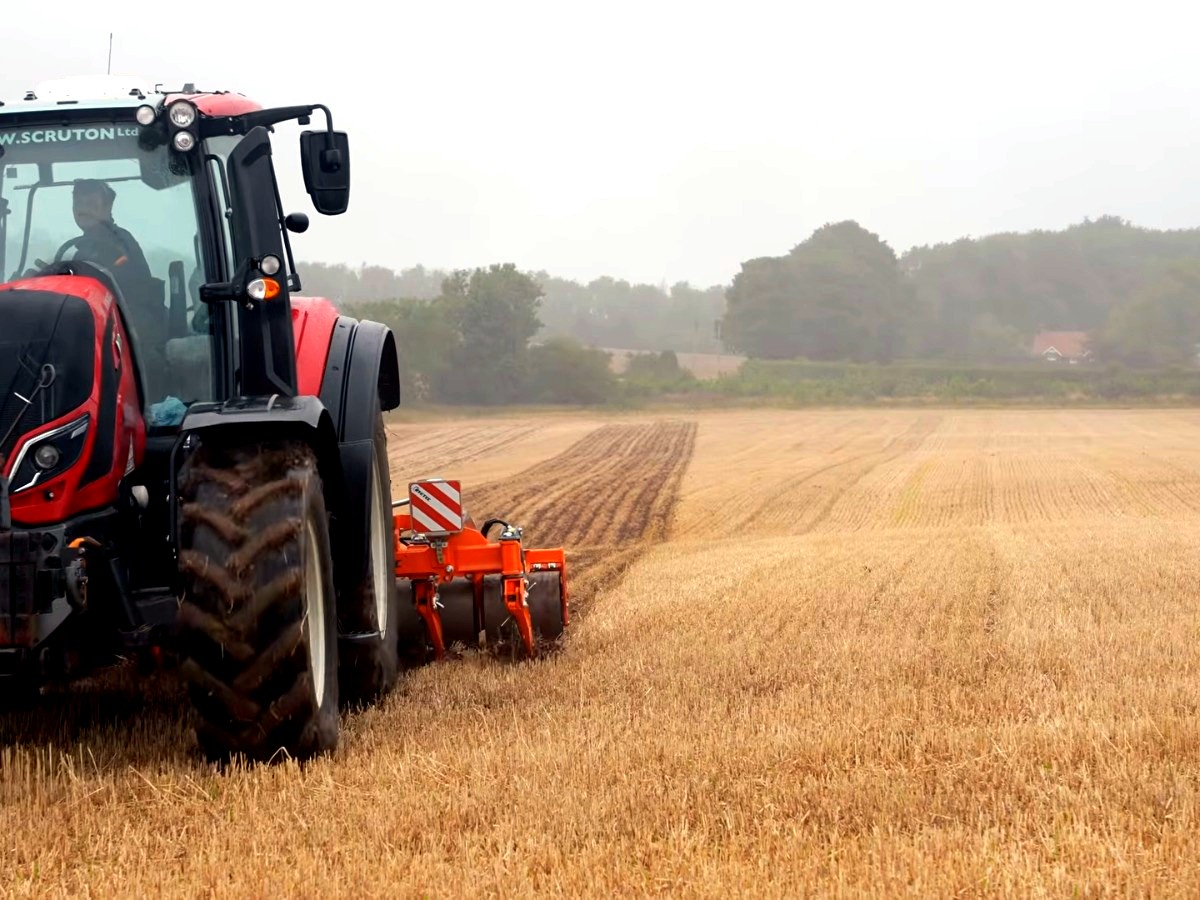
The Ryetec Restorer range is built to relieve compaction with minimal surface disturbance, keeping soil structure, moisture and residue where they belong.
Key features of the Restorer ALD-E include:
- 450mm discs cutting ahead of each leg
- 20mm Hardox legs adjustable to 300mm
- Tool-free leg depth adjustment
- Fully steering legs and discs
- 260mm point-to-point leg stagger
- Hydraulically adjustable rear packer
- Shearbolt or auto reset protection
- 3, 4, 5 and 6m working widths
For larger farms and contractors, the Restorer HD is available up to 9m. If you'd like to subsoil and create a seedbed in one pass, take a look at the Ryetec Riot.
Find Out More
Not sure whether your fields need subsoiling, or which machine suits your soils? We're always happy to talk it through and arrange a demonstration.
To find out more or request a quotation, contact the Ryetec team today on 01944 728186.